
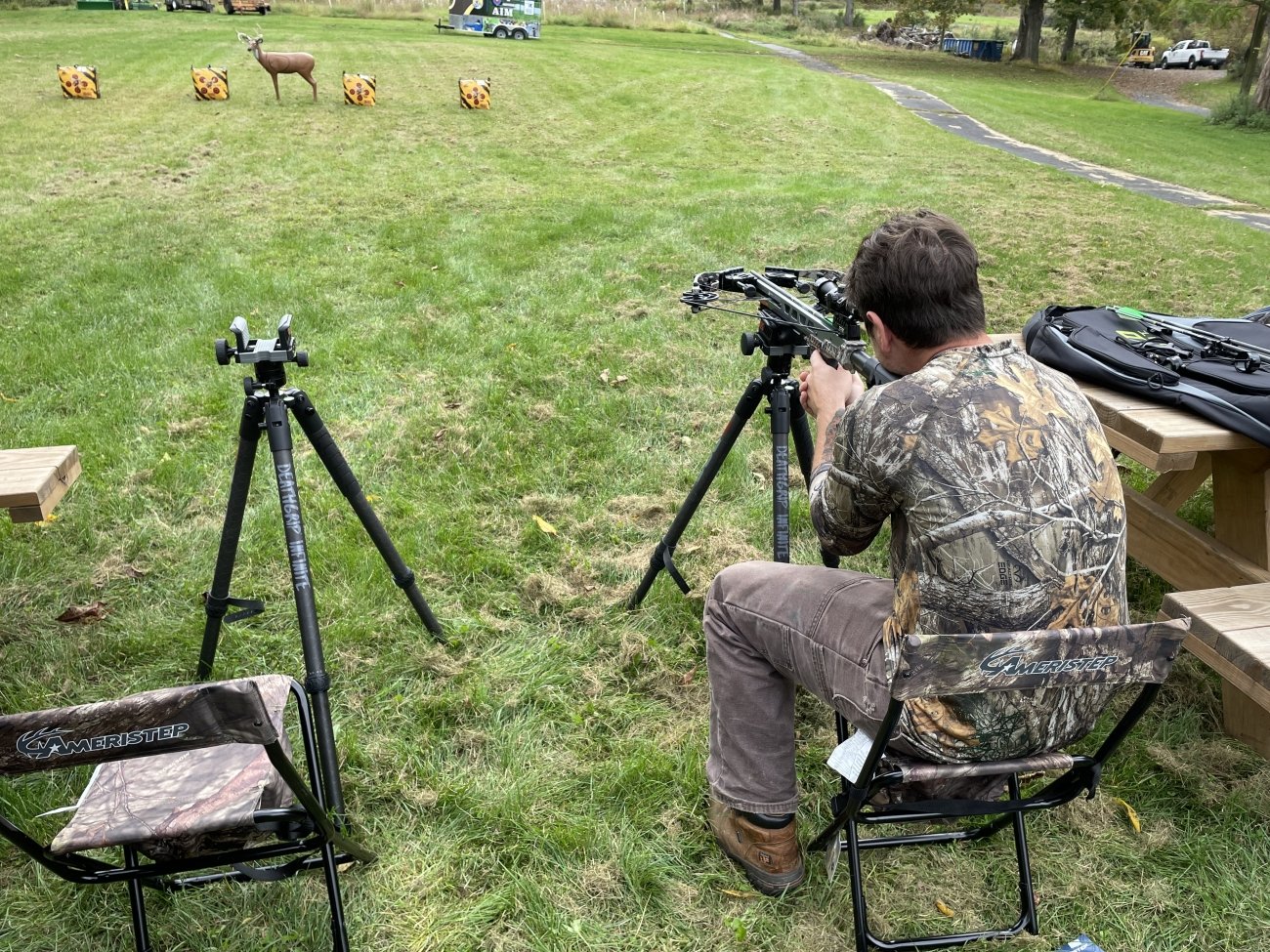
New hunters often spend the most money on the wrong things. A flashy accessory. A second backpack. A pile of gadgets that never leave the garage. I did the same thing in my first season, and I still own a drawer full of proof.
This guide gives you a smarter order of operations: choose the weapon that fits you, match the projectiles, add support gear and practice until the whole kit works as one system. Always follow your local hunting laws and complete any required safety training first.
Start With Fit and Weight
Comfort comes before everything. If the weapon feels awkward, you will shoot worse and hunt less. Weight matters more than most beginners expect, especially on long walks in cold weather.
A lighter build is easier to carry, easier to hold steady and kinder on your shoulders. If you want to see how weight changes a trip, read about how a light crossbow can transform a hunting day. Then handle models in person if you can. Check balance, trigger feel, stock length and safety features.
| Factor | What to check | Why it matters |
|---|---|---|
| Weight | Carry it for ten minutes | Fatigue ruins accuracy |
| Length | Shoulder fit | Controls aim and comfort |
| Trigger | Smooth, clear break | Consistent shots |
| Safety | Simple, reliable design | Protects you and others |
Never shop on price alone. A fair price for a good fit beats a bargain that sits unused.
Match the Projectiles to the Weapon
Your equipment works as a pair. Mismatched projectiles cost accuracy and can cause damage or injury. Always follow the manufacturer’s specifications for length, weight and nock type.
When shopping, many hunters look at lists of the best hunting arrows to get a starting point, then narrow the field by checking what their weapon requires. Compare straightness tolerances, weight, material and the type of tips you plan to use.
A few buying tips from my own mistakes:
- Buy a small test set before a full dozen
- Weigh and measure each one
- Mark them in order and track which shoot best
- Keep a spare set in the same specification
- Store them in a protective case
- Inspect each one before every outing
- Replace anything cracked or bent
Seven rules, and the last one is not optional.
Add Stable Support
Support gear is the most overlooked part of a hunting kit. A steady rest improves shot placement and reduces fatigue during long waits. It also helps with glassing and range estimation.
Look at tripods for shooting that offer a stable platform, adjustable height and a secure head. Check how quickly you can set it up with cold hands, because that is the real test. Weight and packed length matter too, since you will carry it.
| Support option | Strength | Trade-off |
|---|---|---|
| Fixed shooting stick | Light and quick | Limited stability |
| Adjustable tripod | Flexible height | More weight |
| Bipod attachment | Compact | Less stable on uneven ground |
| Natural rest | Free | Not always available |
Practice using your support in real conditions: wind, slopes, damp ground. A system that works in the yard may behave differently in the woods.
Build a Cold and Wet Weather Layer
Gear does not stop at the weapon. Clothing and small accessories decide how long you can stay in the field.
Core items:
- Layered base, mid and outer clothing
- Waterproof boots with warm socks
- Gloves that still allow fine control
- A warm hat and face covering
- Hand warmers
- A compact first aid kit
Six items. Test gloves with your setup before the season, not during it.
Practice Like It Counts
A kit is only as good as its owner. Set a weekly practice plan with realistic distances and conditions. Record each session and track groupings. Practice every step: loading, safety, aiming, release and unloading. Safe handling habits should be automatic.
I keep a simple range log with the date, conditions, distance and notes. After a few weeks, the log tells me where I am improving and what still needs work.
Plan Your Spending in Order
Spend in this order: safety training, weapon fit, projectiles, support, clothing and extras. If money runs short, cut from the end of the list, never the beginning.
Respect the Rules and the Land
Every skill you build rests on responsibility. Before the season, read the local hunting regulations from start to finish. Check season dates, tagging rules, legal equipment and required licenses. Rules change, and ignorance is not a defense.
Take a hunter education course if you have not already. Good courses cover safe handling, ethics, first aid and wildlife identification. I learned things in mine that I still use every season.
Respect private land. Ask permission, thank the owner and leave gates the way you found them. A courteous hunter gets invited back, and a careless one closes the door for everyone.
Plan for the whole outing, including recovery of any animal and care for the meat. Bring the tools and the knowledge for clean, respectful handling, and pack out everything you bring in.
Finally, tell someone your plan. A name, a location and a return time can save your life if something goes wrong. Hunting is a privilege, and carrying that mindset makes every trip better.
Conclusion
A practical crossbow kit starts with fit, matches the projectiles, adds stable support and ends with plenty of honest practice. Handle two or three models this month, set a purchase order for your budget and book a range session. Good hunters are built by repetition, not accessories.